Thursday, February 10, 2011

Long Day of Surprises


February 10th

Today was a long day (meetings from 8:30 a.m. til 9:30 p.m.) with travel to other cities and full of pleasant surprises.

I started off the day meeting with group risk managers that were doing some extremely innovative pooling of disparate risks from different industries. The surprise was how they had made a profitable business doing things counter intuitive to what is done in the states. They had great ideas for internships for our students including developing case studies. I met with the CEO of a company who is perhaps the most visibly passionate person I have met about how his company contributes to the triple bottom line (people, planet, and Prosperity.). The surprise was the product they manufactured. I met with the director of risk for one of the largest public utilities in the world.Surprisingly her passion was around energy conservation and sustainability. Finally I drove past thousands of government subsidized housing neighborhoods that had been built as part of Mandela's initiative to provide homes to poor people. It was uplifting to see this transformation that replaced the types of houses seen in my previous blogs in other countries. They are simple homes but pleasant. They have used the taxes from businesses that have grown dramatically in SA. Most of the businesses I saw in Sandton City did not exist 20 years ago. Just very dramatic growth and huge opportunities here.

Started off the day driving through town (in a Los Angeles type traffic jam) to Group RIsk Management Services. They are doing some really innovative ways in helping their clients assess and manage risk. It is comprehensive and cutting edge. We discussed how they were able to pool risks from different industries to make them more appealing to the insurance underwriters that may not have wanted to insure them as a stand alone risk.
They had great ideas on how to make the learning experience interesting and relevant for students including developing case studies, taking students on field trips to their clients (including mining operations), and showing students how they model risk.


After that was lunch and then off to Pretoria (administrative Capitol of SA) where we met with the CEO of a multimillion dollar company that has at times employed as many as 6000 people. I noticed the recognitions on the wall for their meeting the most widely recognized international safety standards (OSHA 18001) and quality standards ISO 9001. The company has several government ministers on its board (which had impressive corporate governance structures in place). The CEO was passionate about safety, product quality and creating jobs. We met with him and the executive risk manager. The CEO personally took us on a tour the plant and went through the quality inspection of the products. He knew the employees in the plant by name and joked with them along the way. They obviously knew him and enjoyed working with him. The employees were visibility eager to share their passion for safety and quality too.
They were proud of how few injuries they had. In fact they had the lowest rate that any of us had ever heard of. Back in his office he enthusiastically discussed the need for emphasizing more than just profits. He gave examples of how they helped employees, their families and the surrounding community. He loved animals and enjoyed that they had spring bok and impala that grazed on their campus. (Which is just outside the suburbs as you can see in the pictures). The surprise- they manufacture munitions and the breadth of risks exposures they have are unparalleled. Students will actually see munitions made and detonated in a specially designed building. Hmmm. Perhaps my personal bias but my surprise was hard to conceal. I'm not sure what I expected but this is truly an amazing experience for students that I expect they will talk about for a long time.

On way home I passed several neighborhoods of traditionally poor black homes. The shacks that once existed have been replaced by the homes like the ones you see in the photo. Under the short time Mandela was president more than 700,000 homes were built for the poor and this has grown much more since. There are still shacks (referred to as infromal settlements and often made up of foreign Africans)just outside of Joburg . The development started by Mandela has really made transformed this country.


Finally came back to Joburg and met with executive director of risk for the major public utility and her husband for dinner. She was passionately about discussing sustainability in a truly authentic way (not just a PR stunt like I see too often). Providing energy to a fast growing company like SA in an environmentally friendly way has some spectacular challenges but she was very adamant about how it could be done.
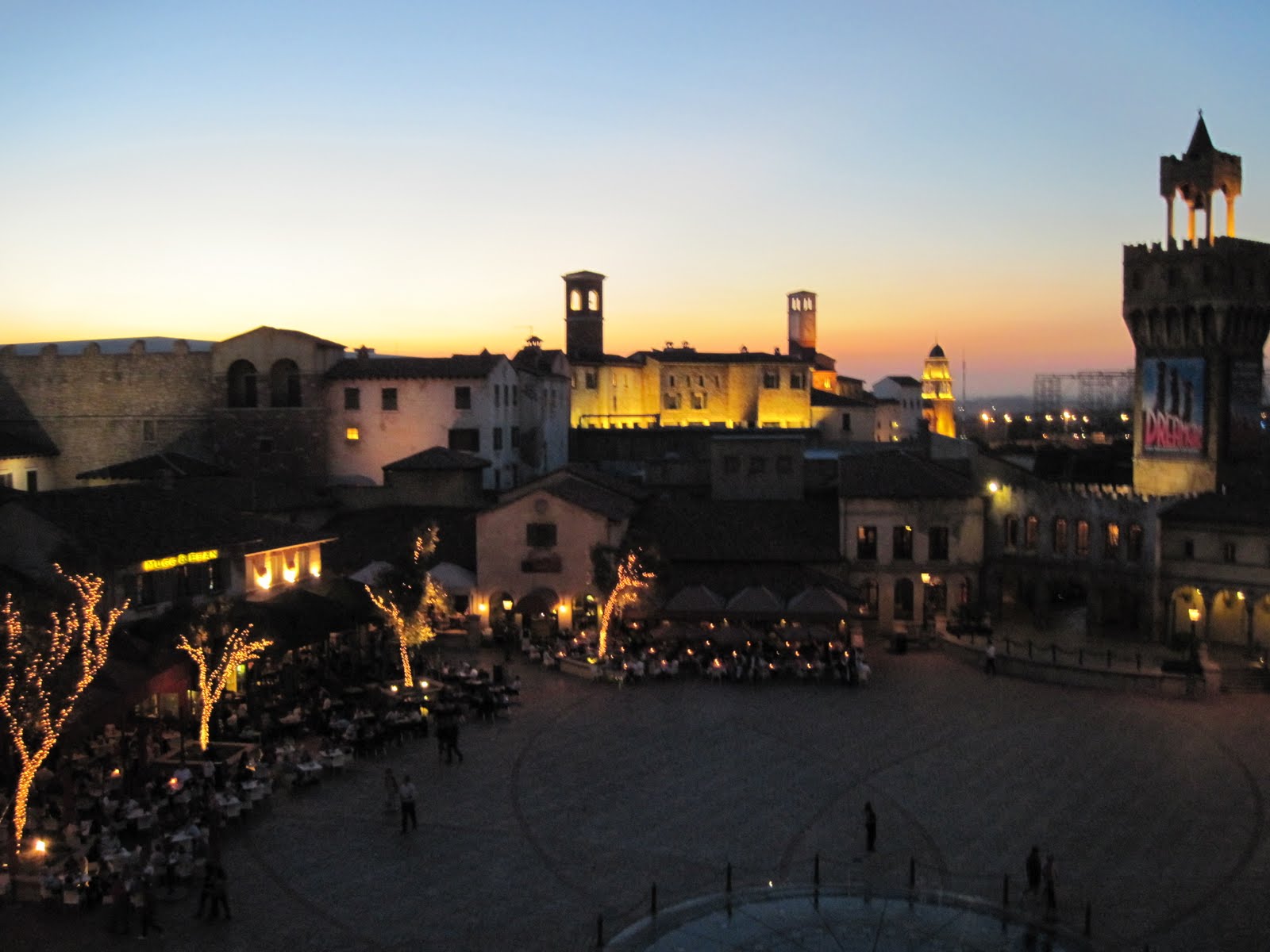
She had perhaps the best ideas on how to select and structure teams for the internships and we spent a lot time brain-storming ideas to help make sure the students had an unforgettable learning experience. She will be a great asset to the program. Had a great meal in Italian restaurant and walked around afterwards still awed by the detail of replicating a Tuscan village (all the way to down to a clothes line with clothes hanging out the window).
It is a bit disney-esque. They refer to it is "funky/trendy"

It's late. Off to bed.
I miss my family terribly but am looking forward to tomorrows meetings.
JIm


Wednesday, February 9, 2011

Trip to South Africa


February 8th, 2011

Well, I'm back in Africa or at least that's what it says on the map. After a 10 hour flight from London I landed in Johannesburg at 6:30 this morning. (Which was 10:30 p.m where my family is). I have to say that so far since I've landed in South Africa it looks a lot more like the States than the Africa I've traveled in and before and blogged through in 2009.

This time I am in Johannesburg to set up internship experience for 2-3 students from ISU. Students will spend three weeks in country in and around Jo burg with 2-3 SA students. Funding for this provided by an SA foundation and benefactors interested in attracting talent into the risk management area in SA.


From airport I took a multi-lane freeway to Sandton City, then on to MonteCasino Hotel. It's owner is one of the benefactors supporting program. I caught a glimpse of Alexandra, an historically impoverished black and mixed race aera that Mandela spent time in. There they were building brick homes along the freeway so it was hard to compare to what I had seen in other parts of Africa.

The hotel/casino is an enormous 80 hectare complex made up to look like a Tuscan village on the outside and the inside. (It is quite surreal). The inside looks like you are walking through an Italian village in the evening or the afternoon depending on which side of the complex you are in). The ceiling is painted and lit to look like an early evening sky. Students from US and SA are going to be blown away by this place. I am.

There is a Piazza (square) right outside my window with a water fountain that has synchronized water and light show. There is a connected performing arts theater that is currently featuring the Riverdance (next week Dreamgirls)and inside the hotel is a 15 screen cinema including the largest 3D screen in the world.

There are several other live comedies and plays going on inside in smaller venues in the complex. And oh yes there is a casino in there somewhere but it wasn't easy to find with the dozens of shops,restaurants, bowling alley, bookstores, etc.


Later morning I met with our hosts Gert and Naresh to discuss the details of the student internship. They showed me around the area including a wild bird sanctuary that the hotel hosts as part of it's corporate social responsibility. Some really pretty birds in there. There were groups of school kids there when I went through. It's a popular field trip for schools. Social responsibility it built into every strategy of every company I have encountered in SA.


I went out to dinner with Naresh at Sandton City in the Nelson Mandela Square and found a huge shopping mall but still only a few signs of Africa as I know it.

Tomorrow I will be meeting with Gert and Naresh and other risk managers to discuss the format and learning objectives for the internship.

I'm still trying to figure out the culture myself (its very different than anything I have experienced before) but everyone has been wonderfully friendly and helpful. I think that first assignment for students will be to report on the culture and how it interacts with risk maanagement goals of organizations here. I think it has a huge impact just as it does in our culture in U.S. which I had not really considered before. Need to come up with a way to measure that on national basis.

Well, it's 8 hours ahead of Chicago so I better get to bed. Long day tomorrow. Will try to answer individual emails tomorrow.

Cheers,
Jim

Thursday, April 22, 2010

Microinsurance Presentations

Since my presentation at CNA on our research on Microinsurance in Africa, which was broadcast on their corporate network nationally, )and can be viewed by clicking on following)CNA Microinsurance Broadcast
The CNA broadcast was rewarding in that afterward several young professionals in the studio audience at Chicago location came up and asked how they could pursue careers in this area.

I have had the opportunity to present on the topic of Microinsurance in Africa at several industry events. I am always amazed at how interested industry professionals are in this topic. At Chicago luncheon event I made sure to end on time at 1:30, I eventually had to stop the questions at 2. I found out several people were sent there by their companies (international insurers and brokers) but for others I think it just captured their imagination, and they saw hope in how businesses (and capitalism in general) can have a noble purpose, and can be constructive, beneficial, and imaginative. I think people working in corporations in this time need that. At a presentation for the Casualty Actuarial Society I had senior actuary come an ask, how can he could be involved.

I'd love to have the time just working with volunteers and others in helping to develop this.
Please go to my wiki at Microinsurance Research for my powerpoint presentations and our Katie School research and white papers (which on this date are out for peer review).

Photos are from recent presentations.

Saturday, November 7, 2009

Microinsurance Conference - Final


Wow, I am back in the States now. Was just too busy to finish blogging from Dakar. That was a good thing. The second day I met even more people interested in our Ghana project including a number of people getting ready to begin work there. So I really feel like we have a lot to offer them and see some very realistic possibilities for partnerships.

The second day featured a presenter who is working on an indexed-based insurance product like ours except for livestock in northern Kenya. What I loved about his project was that he was educating the prospective customers of the product about insurance through and insurance game. That really made me a great idea to develop a game to help explain insurance and our product too in Ghana.

Also saw some presentations on the demand for microinsurance in general and learned that there was an inverse relationship between perceived need for microinsurance by a household and remittances received (money sent to them from a family member outside the community). Evidently, that family member is viewed as their "insurance" if something goes wrong. (I guess it would be interesting to find out if that family member sending the money to their family back in the village feels the same way).

Overall, we saw that indexed-insurance, like what we are working on, still has a lot of work to be done, including figuring out how to sell it, and at what level to sell it to: Government or government bank (Macro level), rural banks or microfinance institutions (Meso level, or individuals (Micro level). My opinion is still that the meso level has the best potential. But I spent the last few hours of the conference running several different ideas passed people on alternative product and am interested in beginning to work on that. I just shared the idea with our team on campus and think it has potential and could eliminate some of the problems of a "traditional" indexed-based insurance product. Will see after we start crunching the numbers if that will work. Stay tuned.

The other thing I got from the conference was just how well health insurance seemed to be developing. Still lots of challenges but growth was impressive and programs were working well passed there pilot stages now. It was interesting that almost all the health insurers were mutuals.

The day concluded by looking at intersection and synergies of microfinance institutions and microinsurers. Currently most microinsurance is delivered through them, but there was a stated need to move beyond that, while at the same time continuing to improve how MFI's work with microinsurance.

I still have to get through all my business cards and return emails for people I met there who want to exchange ideas or work together. Overall, it was an incredible experience and well worth my time.

Faithfully Submitted,
Jim

Wednesday, November 4, 2009

Microinsurance Conference Dakar- Day 1


The photo is of the conference center auditorium at the hotel here is Dakar. It is an impressive facility that resembles the U.N. delegates conference area.There are headphones to use to translate for the audience members, as many of the speakers and conference attendees speak different languages.

There are about 400 people at the conference, from all over the world.

Today's plenary sessions covered the background of microinsurance and the potential impact.
Some key points include:
^Millions of low income families in the world are unprotected from risks of accidents and illnesses. Insurance to working poor and low income households is only about 2 percent.
^About 130 million people in the world have been thrown into poverty as a result of the latest financial crisis.
^Microinsurance is just one tool for helping the poor. They still need investments in education, and health insurance is underutilized tool.
^The working poor deserve security, equity, dignity, and social justice. This includes access to health care, education, and child care.
^Microinsurance can promote the working poor to efficient manage their risk
^Poverty intervention needs to foster interaction with private industry it cannot be just governments.
^Education and regulation of microinsurance is important because this is an uneducated population. Requires close cooperation between the industry and regulators
^Never give up on more financial inclusion

Some of the challenges include:
^Only about 2 percent of the poor have some kind of insurance protection.
There is a:
^Lack of market confidence in the product. There have been examples of insurers not providing the service or payments expected.
^Lack of education of populace on insurance
^Need for regulation that ensures good behavior and solvency but does not hamstring innovation
^Need for risk management services in addition to insurance (but insureds may not be able to afford so there is a need to coordinate with NGO's and governments offering these services).
^Need for a lot more partnering to help move microinsurance forward.
^Need for better-designed and delivered products.

Perhaps the best part of the day was all the great contacts I made and people I met. I am just so impressed (and quite honestly humbled) by the talent and commitment of the people working in this area. I met with people who had authored articles I had read and relied upon for our research, and met some other people who were working in providing funding and technical support. It truly is inspiring as they are so authentic and mission focused. People who just "get it", who understand the interconnectedness of humanity and need for developing sustainable solutions.

I am so grateful I have had the opportunity to meet with them, and I hope work with them in the future.

Well, looking forward to the next conference day.

Faithfully submitted,
Jim

Monday, November 2, 2009

Microinsurance Conference 2009- Dakar


Nov. 2, 2009

Well, it’s hot and beautiful here in Dakar, and nice to leave behind the cold rains.

I began my travels early on Saturday driving to Chicago. I finally arrived in Dakar at around noon on Sunday (6 p.m. in Dakar) I've attached the view from my room

I am incredibly jet-lagged, exhausted but thrilled to be here. I have already made some important contacts, and gained valuable insights.

One of the things I noticed is that people working in this “space” are now using the term Financial Inclusion more than microfinance or microinsurance. I like that and it aligns with some insights that I have had about our Ghana project, to the point that I am retitling the paper from a study on weather-indexed insurance in Ghana to Enhancing Sustainable Access to Capital For Farmers in Ghana Through Indexed Insurance.

First of all, I think it better depicts the scope of the project as we considered much more than just the weather-indexed product through our interviews with farmers, banks, and other stakeholders in Ghana. It also better describes what the goal of such a product should be, sustainable access to capital for farmers in Ghana. Increasing insurance isn’t the goal by itself because insurance is just a mechanism for allowing that, and micro-insurance may not even be the best tool as insurance at the meso (financial institution ) level, or macro (governmental) level might even work better to achieve that goal. It is even broader than agricultural risk management which considers both pre and post loss actions which could be done to reduce the risk of farming and make farming a more attractive activity for loans from banks and microfinance institutions. And enhancing sustainable capital via agricultural risk management through alternative crop production, dry season crops, better inputs, better technology, and better education certainly should be helpful, but without the ability to get capital these actions are still of limited value. Also, access to capital from loans by governments and NGO’s is certainly welcome, they should not be categorized as “sustainable” access, as the donors may not have the financial capability or will to always provide those loans, thus a more sustainable access to capital is required. Enhancing financial capital for farmers might include development of a financial market where farmers could purchase hedging instruments to help provide access to loans. But even enhancing the financial markets is incomplete if the regulatory environment and government policies militate against capital access. For that reason, political voice and power should also play a role in access to sustainable capital.

I plan to pass along this insight of refocusing the goal to be sustainable capital access to some people here who are more knowledgeable about these things than I am to get their response.

Hopefully, will have a few more insights tomorrow. Back to working on the paper. Would like to get this finished by the end of the month.

Jim

Saturday, October 31, 2009

Microinsurace Conference in Dakar

I am traveling to microinsurance conference in Dakar.


I looked at the list of attendees and I am looking forward to meeting a lot of the other people, whose work I've seen, but never met.

Hope to get some new ideas, and make some new contacts to further help in the development of a product that helps deal with agricultural risk in Africa. With climate change this is becoming a huge issue, and each day the research shows more and more the effects of climate change on Africa.

We have completed the first phase of analysis. The correlations with rainfall and crop yield in northern Ghana were not as strong as I was expecting but we used data from last 15 years which is the most variable time period. However, the reality is that that time period might reflect better the next 15 years as opposed to data over the past 50 years, which other correlation studies in other countries use.

Anyway, thanks to Mukthar Mahdi, Genevieve Amamoo, and Alsliddin Odilov for all their hard work over the past few fews on the analysis.

For the other team members on the project, I will keep you posted on the contacts I make and info. I learn from the conference.

Later,
J