Sunday, November 4, 2012
Tanzania Day 1- Dar es Salaam
Got intto Dar last night. I wasn't able to stay at conference hotel but the consolation prize was the best Best Western I have ever seen. First of all it has an ocean view and then the accommodations are wonderful.
See photos below.
The 2 day ICIMIF workshop precedes the conference and took place at the Blue Pearl Hotel. It was interesting. There are about 40 people there representing about 15 different countries. I was the only American, and only four were from North America. Although the sessions were all in English there were only two of us with English as a first language. I think this an advantage but then I guess that means they all know English well enough to participate in a 2 day workshop in English. I'm not sure I could pull that off in French, the only other language I know. It was interesting that during lunch everyone wanted to talk about the American elections. They quizzed me on why we have electoral college and states vote in blocks rather than by popular vote. Hmmm. After I recovered from the idea that not only did they know about our election and who was running, but they knew how voting occurred, I answered in about the best way I could, "That's just the way we do it." I may have been able to put together a more learned answer, but that's really probably the closest to the truth.
Workshop was well-facilitated and had a nice mix of the "usual suspects' at microinsurance conference and a lot of new faces from Kenya and Tanzania. It was nice catching up with some of old friends during lunch and I especially enjoyed the discussions and computer simulation with African MFI and microinsurance leaders. The purpose of the workshop was to help address the dual issue of providing a proper insurance product for the poor while maintaining sustainability (profitability) of the insurer.
Here are some insights from the day.
Some challenges identified include
1. Length of time to become sustainable. Usually 3 years for many products (life insurance might be quicker and health insurance longer)
2. Connecting the needs of the microinsured policyholder with the operations of the microinsurer. Policies are often "off the shelf" and incomprehensible by microinsureds, and may not cover their needs. Micro Insurers live in different worlds than the people that purchase their products. Need better understanding.
3. There are already informal ways of managing and pooling risks. These are understood by the poor. Insurance needs to find ways to link to these informal mechanisms.
4. There is a need for training microinsurance staff but challenge is in reaching them. Online offers some possibility but the design must reflect the technology available. Internet connections exist but can be unreliable. (For example we lost internet connection on the workshop several times. And this was in a nice hotel. Internet connections in even less technologically advanced areas is even for inconsistent.
The second half of the day focused on key performance indicators (KPIs) for microinsurers and this was followed by a computer simulation. KPI's include the following categories:
Product Value
Expense ratio- <25 br="br">25>
Claims ratio- >65%)
NI ratio - around 10 percent (at least that holds true for a mutual)
Customer Satisfaction
Retention rate > 85%
Coverage ratio need to have at least 25% of market for products like health insurance or else you get adverse selection
Growth rate
Service Quality
Claims -Days to Settle
Claim rejection ratio-
Financial Prudence
Solvency ratio (assets/liability
Liquidity (cash over ST liabilities
They didn't mention it but I would have included premium earned to surplus ratio of less than 3 to 1.
Companies can get in trouble by growing to quickly and if they are highly levered their mispricing can lead to insolvency (So IMHO I'd add that).
Had some good discussions during breaks about how to overcome challenges to online education, and need to build actuarial capacity. Went back to my hotel, sat out on the patio next to the Indian ocean, and worked on my laptop while I ate dinner and had some local beer. (See below)
Looking forward to tomorrow.
Jim
Saturday, November 3, 2012
Arrived in Tanzania
On my way to Microinsurance conference in Dar es Salaam.
Arrived in Tanzania today at Kilimanjaro airport (about the size of a regional airport in the States. I looked out of the plan window there were no visible lights except that of the runway. Decided to stay at hotel Protea near Moshi. Wanted to get some time in around the countryside before heading to Dar es Salaam. It was raining today so I didn't get to do as much as I would have liked. Couldn't even see Kilimanjaro even after it stopped raining. (You can where I would have been able to see Kilimanjaro had it not been cloudy there on the view below) .
While I was waiting for my flight to arrive at the nearby KIA hotel I got to see some interesting wildlife like the blue and orange lizard below and several colorful birds.
I did get to talk with a farmer near the Moshi area. Now that rains have come they are preparing their fields. He will plant second season of maize in December with expectation of May harvest. Also plants potatoes (I think sweet potatoes along with the maize ) . He said that had an "average" harvest in September. He also works job at local hotel. Will head into Dar tonight. I had planned for an afternoon flight by 540 Aviation decided to do maintenance on planes this month so they cancelled their flights to Dar. Rebooked for this evening which i tried to avoid. Not a fan of arriving in a unfamiliar city at midnight. Oh well, best laid plans...
(Blog update) I did may it on the 5 p.m. flight. I guy named Robert from Fly540 Aviation really worked hard on getting me on once he discovered there was an available seat. A lot of other people wanted that but he got me on after about 30 minutes with the folks at Precision Air.
Looking forward to the conference and meeting with people to discuss what they are working on Will try to get some info back to the research team back home. Thanks to John for the NDVI satellite images from BOLE. Interesting. Thanks for sharing comparison with MClean county too. Thanks to Aslihan for crop yield updates too. Askar your questions about planting cycles are on my list, so hope to have the answers soon for you. It's nice that we now have people with Katie looking at three different solutions, weather index, area based crop yield, and NDVI satellite remote sensing. I'm agnostic about which approach works best, but will meet with a researcher who has been doing a lot of field work on insurance demand. Will share results of that discussion with you. Later, Jim
Arrived in Tanzania today at Kilimanjaro airport (about the size of a regional airport in the States. I looked out of the plan window there were no visible lights except that of the runway. Decided to stay at hotel Protea near Moshi. Wanted to get some time in around the countryside before heading to Dar es Salaam. It was raining today so I didn't get to do as much as I would have liked. Couldn't even see Kilimanjaro even after it stopped raining. (You can where I would have been able to see Kilimanjaro had it not been cloudy there on the view below) .
While I was waiting for my flight to arrive at the nearby KIA hotel I got to see some interesting wildlife like the blue and orange lizard below and several colorful birds.
I did get to talk with a farmer near the Moshi area. Now that rains have come they are preparing their fields. He will plant second season of maize in December with expectation of May harvest. Also plants potatoes (I think sweet potatoes along with the maize ) . He said that had an "average" harvest in September. He also works job at local hotel. Will head into Dar tonight. I had planned for an afternoon flight by 540 Aviation decided to do maintenance on planes this month so they cancelled their flights to Dar. Rebooked for this evening which i tried to avoid. Not a fan of arriving in a unfamiliar city at midnight. Oh well, best laid plans...
(Blog update) I did may it on the 5 p.m. flight. I guy named Robert from Fly540 Aviation really worked hard on getting me on once he discovered there was an available seat. A lot of other people wanted that but he got me on after about 30 minutes with the folks at Precision Air.
Looking forward to the conference and meeting with people to discuss what they are working on Will try to get some info back to the research team back home. Thanks to John for the NDVI satellite images from BOLE. Interesting. Thanks for sharing comparison with MClean county too. Thanks to Aslihan for crop yield updates too. Askar your questions about planting cycles are on my list, so hope to have the answers soon for you. It's nice that we now have people with Katie looking at three different solutions, weather index, area based crop yield, and NDVI satellite remote sensing. I'm agnostic about which approach works best, but will meet with a researcher who has been doing a lot of field work on insurance demand. Will share results of that discussion with you. Later, Jim
Thursday, February 17, 2011
Weekend Around JoBurg
After meeting with everyone over the past few days I decided to see more of the cultural aspects of SA especially in the Joburg area. My first stop was the Apartheid museum in Joburg near the traditional black township of Soweto.
The museum is a multimedia experience telling the story of the birth of South Africa, the era of apartheid, (which lasted for abut 50 years and ended in 1990) and the era of political violence between 1990 when Mandela was elected president in 1994It inclused stories of he people who died fighting to bring democracy to South Africa. It also chronicles the life of Nelson Mandela and his abilty to reconcile a divided country. During one politically intense time in which a beloved friend of Mandela was killed by a racist, he urged people at a mass rally to "Throw their weapons into the sea".
The museum has a representation of the small cell where Mandela was kept from 1964 until 1982 when he was moved to another location. One of my favorite quotes from Mandela that illustrated his character and belief in the potential for reconcilation are:
"I always knew that deep down in every human hart, there is mercy and generosity"
He also understood that revenge against his oppressors would not lead to a free country. On the front of the museum is his quote which says:
"To be free is not merely to cast off one's chains, but to live in a way that respects and enhances the freedom of others." Mandela 1999.
There is a theme park across from the museum that looked a lot like a Six Flags type theme park you would see in the states.
The next day I went to Rhino and Lion park outside of Johannesburg. I've included some photos from that visit. I also uploaded a video where the family I was travelling with encountered a white lion walking toward them. You can hear the kids excitement as the lion approaches. That was pretty cool. I uploaded that to You Tube.
http://www.youtube.com/watch?v=GO5sEsEimdE
All in all, this was an incredible trip. I have a pretty good idea of how to structure the internship now.
I'm back home now and recovering from jet lag. Last night I dreamed of South Africa.
-Jim
Friday, February 11, 2011
Sandton City
Today was an interesting day for Africa. Mubarak's resignation was a subject of conversation here in SA. It led to further discussions on political risks and how they can be managed.
I spent the day in Sandton City which is the financial and commerce center of JoBurg. Sky rise businesses all over. Looks like downtown financial hub of a major midwestern city. As mentioned in earlier blog two days ago. This barely existed 20 years ago. It was just countryside.
Today was probably the best day for figuring out how we will be organizing the internships. I met with NedBank and found a treasure trove of ideas on managing risks across the organization. I've never seen such a well- designed and documented ERM program. I met with the risk management team and we came up with some ideas for ERM case studies that I will be working with them on later.
When I got to Nedbank I was introduced to the risk management team and they brought me a binder on how risk is managed at NedBank. It was full of jaw-dropping detail on how the universe of risks are identified and managed across the organization. It is at least a generation ahead of anything I've seen in the states on ERM,( which isnt saying a lot since we are remarkably still in our infancy on ERM in the states). It was inspiring to see an organization that had a organizational culture that valued risk management and sustainable prosperity over short term quarterly earnings. (I keep mentioning culture don't I but I think this corporate culture comes from a larger national culture. That's my working hypothesis anyway).The investments they made in risk management did not pay off immediately but have over years yielded tremendous benefits to all stakeholders. They were so open with wanting to help with this internship project and help in the development of the next generation of leaders that I truly felt overwhelmed with the sense of good fortune in finding such great partners in this program. Our students and their future employers owe a debt of gratitude to these folks. I'll be back to work with them on case studies. They have some great ERM stories that we can turn into case studies. I think the students should start with this firm when they come here to learn about risk management in SA.
Next I met with Alexander Forbes. A broker/risk solutions firm that provides risk engineering, risk financing, and of course market broking services. This should be the second firm the students visit. They have a breadth of expertise across industries and will allow the students to begin to think like consultants before going out to the business clients to assess their risks. Another great partner for this.
MANDELA SQUARE
I finished up the day and walked through the shopping mall (see photo) to get to Nelson Mandela Square which is surrounded by restaurants.I ended the day at the famous Butcher Shop restaurant in Nelson Mandela Square with Gert and his wife. An nice T-Bone steak, Hensa Beer, and finally South African Amarillo Creme to top off unbelievably productive day. Tomorrow I go to Apartheid Museum. So this is a nice place to end the day. Mandela Square with children black and white playing in the fountain under the fatherly gaze of Nelson Mandela's statue.
Cheers.
jim

Thursday, February 10, 2011
Long Day of Surprises

February 10th
Today was a long day (meetings from 8:30 a.m. til 9:30 p.m.) with travel to other cities and full of pleasant surprises.
I started off the day meeting with group risk managers that were doing some extremely innovative pooling of disparate risks from different industries. The surprise was how they had made a profitable business doing things counter intuitive to what is done in the states. They had great ideas for internships for our students including developing case studies. I met with the CEO of a company who is perhaps the most visibly passionate person I have met about how his company contributes to the triple bottom line (people, planet, and Prosperity.). The surprise was the product they manufactured. I met with the director of risk for one of the largest public utilities in the world.Surprisingly her passion was around energy conservation and sustainability. Finally I drove past thousands of government subsidized housing neighborhoods that had been built as part of Mandela's initiative to provide homes to poor people. It was uplifting to see this transformation that replaced the types of houses seen in my previous blogs in other countries. They are simple homes but pleasant. They have used the taxes from businesses that have grown dramatically in SA. Most of the businesses I saw in Sandton City did not exist 20 years ago. Just very dramatic growth and huge opportunities here.
Started off the day driving through town (in a Los Angeles type traffic jam) to Group RIsk Management Services. They are doing some really innovative ways in helping their clients assess and manage risk. It is comprehensive and cutting edge. We discussed how they were able to pool risks from different industries to make them more appealing to the insurance underwriters that may not have wanted to insure them as a stand alone risk.
They had great ideas on how to make the learning experience interesting and relevant for students including developing case studies, taking students on field trips to their clients (including mining operations), and showing students how they model risk.

After that was lunch and then off to Pretoria (administrative Capitol of SA) where we met with the CEO of a multimillion dollar company that has at times employed as many as 6000 people. I noticed the recognitions on the wall for their meeting the most widely recognized international safety standards (OSHA 18001) and quality standards ISO 9001. The company has several government ministers on its board (which had impressive corporate governance structures in place). The CEO was passionate about safety, product quality and creating jobs. We met with him and the executive risk manager. The CEO personally took us on a tour the plant and went through the quality inspection of the products. He knew the employees in the plant by name and joked with them along the way. They obviously knew him and enjoyed working with him. The employees were visibility eager to share their passion for safety and quality too.
They were proud of how few injuries they had. In fact they had the lowest rate that any of us had ever heard of. Back in his office he enthusiastically discussed the need for emphasizing more than just profits. He gave examples of how they helped employees, their families and the surrounding community. He loved animals and enjoyed that they had spring bok and impala that grazed on their campus. (Which is just outside the suburbs as you can see in the pictures). The surprise- they manufacture munitions and the breadth of risks exposures they have are unparalleled. Students will actually see munitions made and detonated in a specially designed building. Hmmm. Perhaps my personal bias but my surprise was hard to conceal. I'm not sure what I expected but this is truly an amazing experience for students that I expect they will talk about for a long time.
On way home I passed several neighborhoods of traditionally poor black homes. The shacks that once existed have been replaced by the homes like the ones you see in the photo. Under the short time Mandela was president more than 700,000 homes were built for the poor and this has grown much more since. There are still shacks (referred to as infromal settlements and often made up of foreign Africans)just outside of Joburg . The development started by Mandela has really made transformed this country.

Finally came back to Joburg and met with executive director of risk for the major public utility and her husband for dinner. She was passionately about discussing sustainability in a truly authentic way (not just a PR stunt like I see too often). Providing energy to a fast growing company like SA in an environmentally friendly way has some spectacular challenges but she was very adamant about how it could be done.
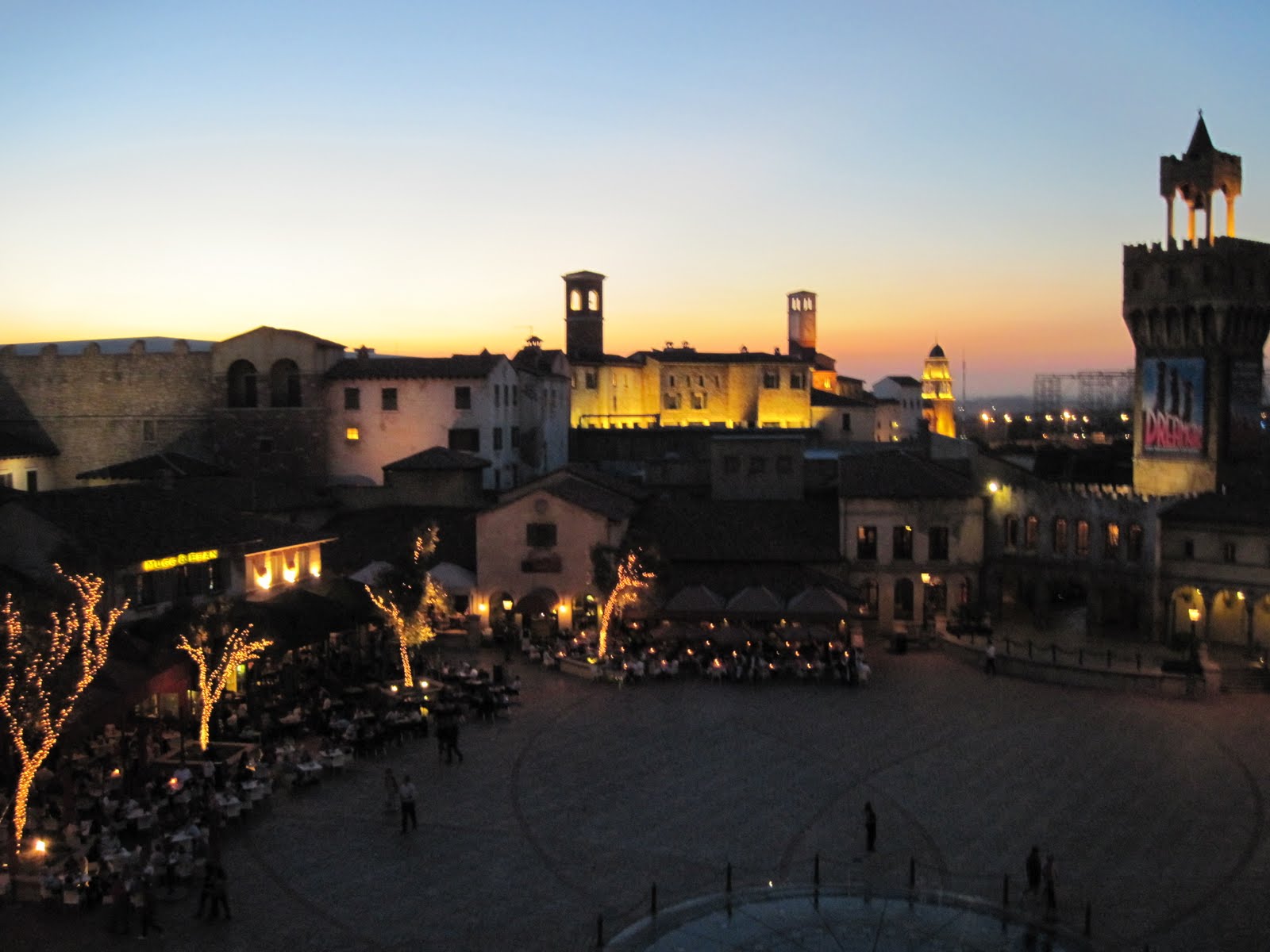
She had perhaps the best ideas on how to select and structure teams for the internships and we spent a lot time brain-storming ideas to help make sure the students had an unforgettable learning experience. She will be a great asset to the program. Had a great meal in Italian restaurant and walked around afterwards still awed by the detail of replicating a Tuscan village (all the way to down to a clothes line with clothes hanging out the window).
It is a bit disney-esque. They refer to it is "funky/trendy"
It's late. Off to bed.
I miss my family terribly but am looking forward to tomorrows meetings.
JIm
Wednesday, February 9, 2011
Trip to South Africa

February 8th, 2011
Well, I'm back in Africa or at least that's what it says on the map. After a 10 hour flight from London I landed in Johannesburg at 6:30 this morning. (Which was 10:30 p.m where my family is). I have to say that so far since I've landed in South Africa it looks a lot more like the States than the Africa I've traveled in and before and blogged through in 2009.
This time I am in Johannesburg to set up internship experience for 2-3 students from ISU. Students will spend three weeks in country in and around Jo burg with 2-3 SA students. Funding for this provided by an SA foundation and benefactors interested in attracting talent into the risk management area in SA.
From airport I took a multi-lane freeway to Sandton City, then on to MonteCasino Hotel. It's owner is one of the benefactors supporting program. I caught a glimpse of Alexandra, an historically impoverished black and mixed race aera that Mandela spent time in. There they were building brick homes along the freeway so it was hard to compare to what I had seen in other parts of Africa.
The hotel/casino is an enormous 80 hectare complex made up to look like a Tuscan village on the outside and the inside. (It is quite surreal). The inside looks like you are walking through an Italian village in the evening or the afternoon depending on which side of the complex you are in). The ceiling is painted and lit to look like an early evening sky. Students from US and SA are going to be blown away by this place. I am.
There is a Piazza (square) right outside my window with a water fountain that has synchronized water and light show. There is a connected performing arts theater that is currently featuring the Riverdance (next week Dreamgirls)and inside the hotel is a 15 screen cinema including the largest 3D screen in the world.
There are several other live comedies and plays going on inside in smaller venues in the complex. And oh yes there is a casino in there somewhere but it wasn't easy to find with the dozens of shops,restaurants, bowling alley, bookstores, etc.

Later morning I met with our hosts Gert and Naresh to discuss the details of the student internship. They showed me around the area including a wild bird sanctuary that the hotel hosts as part of it's corporate social responsibility. Some really pretty birds in there. There were groups of school kids there when I went through. It's a popular field trip for schools. Social responsibility it built into every strategy of every company I have encountered in SA.

I went out to dinner with Naresh at Sandton City in the Nelson Mandela Square and found a huge shopping mall but still only a few signs of Africa as I know it.
Tomorrow I will be meeting with Gert and Naresh and other risk managers to discuss the format and learning objectives for the internship.
I'm still trying to figure out the culture myself (its very different than anything I have experienced before) but everyone has been wonderfully friendly and helpful. I think that first assignment for students will be to report on the culture and how it interacts with risk maanagement goals of organizations here. I think it has a huge impact just as it does in our culture in U.S. which I had not really considered before. Need to come up with a way to measure that on national basis.
Well, it's 8 hours ahead of Chicago so I better get to bed. Long day tomorrow. Will try to answer individual emails tomorrow.
Cheers,
Jim
Thursday, April 22, 2010
Microinsurance Presentations
Since my presentation at CNA on our research on Microinsurance in Africa, which was broadcast on their corporate network nationally, )and can be viewed by clicking on following)CNA Microinsurance Broadcast
The CNA broadcast was rewarding in that afterward several young professionals in the studio audience at Chicago location came up and asked how they could pursue careers in this area.
I have had the opportunity to present on the topic of Microinsurance in Africa at several industry events. I am always amazed at how interested industry professionals are in this topic. At Chicago luncheon event I made sure to end on time at 1:30, I eventually had to stop the questions at 2. I found out several people were sent there by their companies (international insurers and brokers) but for others I think it just captured their imagination, and they saw hope in how businesses (and capitalism in general) can have a noble purpose, and can be constructive, beneficial, and imaginative. I think people working in corporations in this time need that. At a presentation for the Casualty Actuarial Society I had senior actuary come an ask, how can he could be involved.
I'd love to have the time just working with volunteers and others in helping to develop this.
Please go to my wiki at Microinsurance Research for my powerpoint presentations and our Katie School research and white papers (which on this date are out for peer review).
Photos are from recent presentations.
The CNA broadcast was rewarding in that afterward several young professionals in the studio audience at Chicago location came up and asked how they could pursue careers in this area.
I have had the opportunity to present on the topic of Microinsurance in Africa at several industry events. I am always amazed at how interested industry professionals are in this topic. At Chicago luncheon event I made sure to end on time at 1:30, I eventually had to stop the questions at 2. I found out several people were sent there by their companies (international insurers and brokers) but for others I think it just captured their imagination, and they saw hope in how businesses (and capitalism in general) can have a noble purpose, and can be constructive, beneficial, and imaginative. I think people working in corporations in this time need that. At a presentation for the Casualty Actuarial Society I had senior actuary come an ask, how can he could be involved.
I'd love to have the time just working with volunteers and others in helping to develop this.
Please go to my wiki at Microinsurance Research for my powerpoint presentations and our Katie School research and white papers (which on this date are out for peer review).
Photos are from recent presentations.
Subscribe to:
Comments (Atom)